Why I built a note-taking app with only two columns
A few years ago, while completing my master's degree, I found myself in a frustrating situation. We were learning genuinely great things frameworks, models, ideas that I was sure I could take back to the workplace and use straight away. But there was so much of it. Lecture after lecture, and week by week it piled up.
After the exam, I realised I couldn't remember what we'd covered over the semester. Not in any useful detail, anyway. I had no system for remembering. I had notes, but notes aren't a system.
The problem with saving everything
My first instinct was the same as everyone's: I needed a better app.
So I tried them. The ones with infinite nesting, tags, backlinks and plugins. The ones that promised to be my "second brain."
What I found was that these tools are built to capture everything. Every meeting, every link, every passing thought, every half-formed idea all of it goes in, because you never know when you might need it. And so the archive grows, and you never go back to any of it.
I had hundreds of notes and almost none of them were helping me remember anything. I wasn't building knowledge. I was building a warehouse.
Notes worth returning to
Somewhere along the way I stopped asking "how do I capture more?" and started asking a different question: what do I actually want to remember?
Not everything. The few things that matter. The idea from a book that changed how I think. The framework I want to be able to explain from memory. The lesson a mentor taught me that I don't want to lose. The concept from a course I'll need in six months.
Those notes deserve a better home not in an app I'm afraid to open. They deserve somewhere calm, intentional and beautiful a place you want to return to, not an inbox you avoid.
That's what I wanted to build. Not a second brain. A small, carefully kept first one.
Two columns are enough
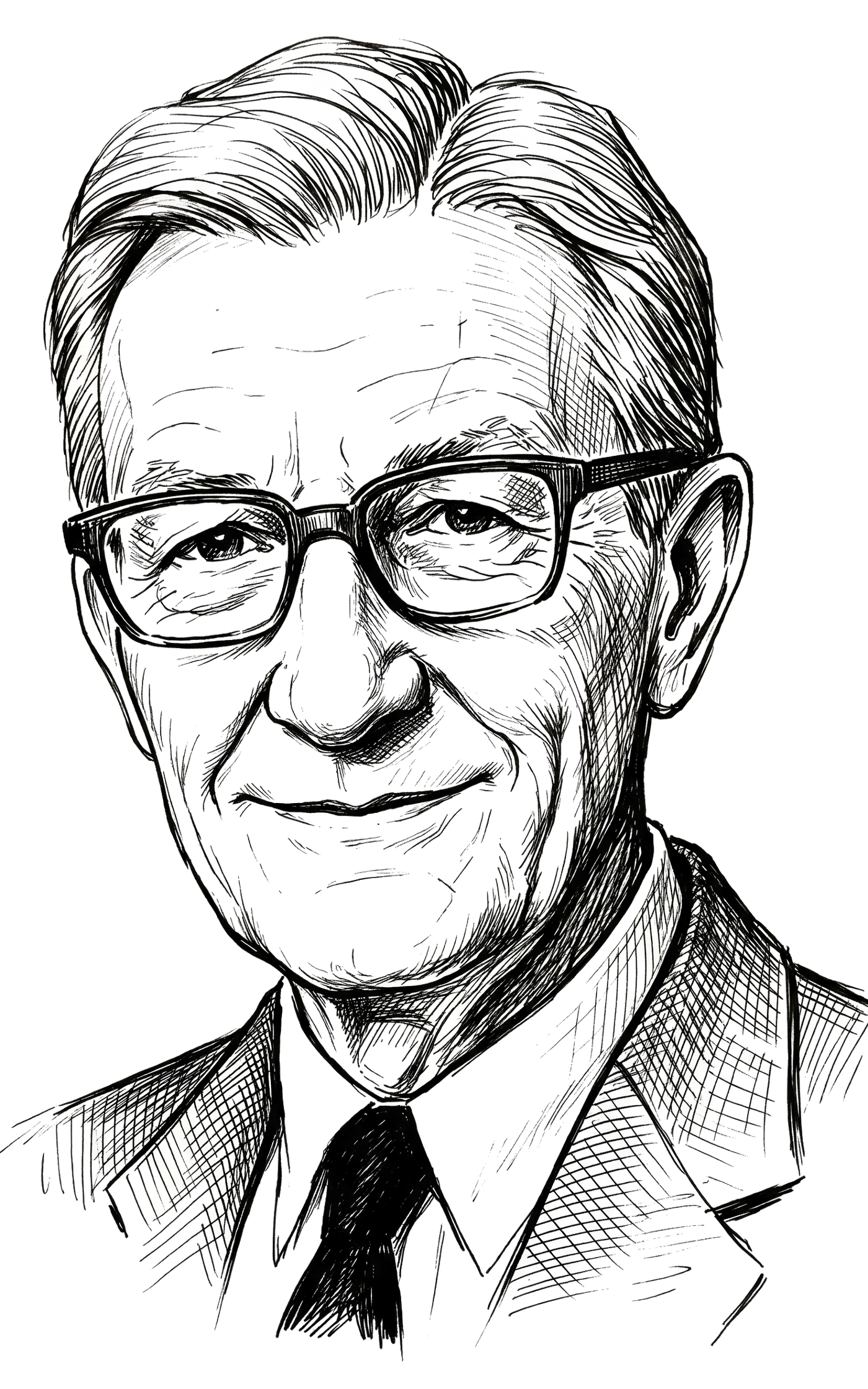
Around that time I went back and properly read about the Cornell Note-Taking method, developed at Cornell University in the 1940s by Walter Pauk (pictured above). The idea is almost embarrassingly simple. You divide the page into two columns:
- On the right, you write your notes as normal.
- On the left, you write cues questions, keywords, prompts that point back to the notes.
Later, you cover the right column and use only the cues to test yourself.
That's it. That's the whole method.
And it works, because it forces the one thing that actually builds memory: active recall. Re-reading notes feels like studying, but it's mostly just recognition. Asking yourself a question and trying to answer it from memory is uncomfortable, and that discomfort is exactly where learning happens.
Why I built kodye.app
So I built an app around it. kodye.app is a note-taking app with two columns. Not a two-column mode, or a template you can add two columns, because that's the method.
Everything else followed from a rule I kept coming back to: if a feature doesn't help someone remember, it doesn't go in. There's a view for notes only, a view for cues only, and a split view for both. You can hide the cues while you're learning something new and bring them back later. When you're ready to test yourself, the Pop Quiz takes the cues and notes and turns them into questions.
The goal was never to be the most powerful note-taking app. It was to be a beautiful, quiet place for the things you care about and the one you actually come back to.
The lesson I keep relearning
I've written before about constraints, and how limits can be a stimulus for better work. Building Kodye was the clearest example of that I've experienced. Two columns is a constraint. It sounds limiting. In practice, it removed every decision that wasn't about the actual thinking.
I used to think a good tool was one that could hold everything. I now think a good tool is one that makes you choose what's worth keeping and then makes you want to return to it.
Notes aren't valuable because you took them. They're valuable because you can still use them months later.
Two columns turned out to be all I needed for that. It took me a master's degree and a decade of trying everything else to find out.